If You Don’t Know, You Won’t Go: Aïda Muluneh in Bradford

If you visit the website set up to showcase Bradford as the 2025 City of Culture, the very first page that you come to – at least at the moment (February 2025) – celebrates the major photographic commission awarded to Aïda Muluneh and the resultant exhibition at Impressions Gallery.  Those websites are not sequenced by chance.  This means in effect that Muluneh can be considered the lead visual artist of the City of Culture.  There is an exhibition of David Hockney’s joiners and the later multi-screen films he derived from them at the newly reopened National Science and Media Museum, the sad relic of a once-brave museum which has shifted its mission over the years from its collections to the cheery ‘experiences’ it can offer.  Hockney is a leading son of Bradford, and his joiners are always well worth seeing.  Yet I venture to open these lines by asking this : how many people reading this had any awareness of Muluneh’s show?  I wish I had the attendance figures, but how many people have visited it so far – perhaps excluding Yorkshire schoolchildren on worthy trips? 

Something has gone wrong.  Nomination as City of Culture for a year is a way of promoting culture, of course, but it is perhaps primarily a way of bringing attention and with it a variety of economic benefits to the titular city.  Visitors and the jobs that go with them are the name of the game, and ambitious targets for both are set.  In the UK, the City of Culture is administered by the Department for Digital, Culture Media and Sport, the spectacularly feeble DCMS, a department which has been starved of funds and high-placed allies throughout the succession of Tory ministries recently ended, and which has been led on the whole by a long, long procession of useless placemen and placewomen hoping only to move to more senior cabinet positions.  It may be worth recalling that the idea of the City of Culture was originally a European one, and indeed that a number of UK cities were booted off the shortlist when the UK left the European Union.  The credit for the origination of such a scheme is usually given to Melina Mercouri, the Greek Minister of Culture of the 1980s, although I have a shapeless memory that it was also very much initially driven by Jack Lang, her French counterpart.  Neither Mercouri nor Lang were place(wo)men; any contemporary UK citizen might well look with enormous envy at ministers of culture with that degree of energy, with that obvious concern for culture, and with that level of cabinet support.  Lucy Frazer, anyone?  She was the last of that long line of Conservative Secretaries of State for Culture (the department has gone under a series of names, including at one point being the Department  for  Culture, Olympics, Media and Sport, as though the Olympics were somehow not a sporting event).  Ms Frazer’s achievements in the field of culture have not, as cricket commentators used to say, troubled the scorers.  I don’t know how far back the planning for Bradford as the City of Culture went, although the announcement was made in May 2022 – during the tenure as Culture Secretary of Nadine Dorries – a placewoman if ever there was one.  However far back we go, the Department has made over £15m available to Bradford – and that without counting substantial further funding from the Arts Council and various of the National Lottery funds.  Add Bradford council’s own money and money from the region and it begins to add up. It’s small, small money in national terms, but it’s relatively big money for Bradford and for culture.

Aïda Muluneh. The Loud Silence, 2024
Photographed in the courtyard of Castell Coch in
Cardiff

I called Aïda Muluneh’s show a commission: it was new work made for this occasion, and it is scheduled to tour after Bradford to one city from each of the home countries. It will go to Belfast, to Cardiff and to Glasgow.  The whole show is called Nationhood: Memory and Hope. It opened in Bradford in January 2025, and will close in December of this same year.  Because of that nationwide tour, Muluneh sought to make pictures based on her understanding of the cities of the tour, and that’s her main series, called The Necessity of Seeing.   She made brightly coloured tableaux in each of them, and those pictures directly address her knowledge and impressions of those places.  In addition, she made simple black-and-white portraits of people who helped her to understand the unfamiliar British cities in which she worked.  In another addition, a number of emerging portrait photographers, chosen deliberately as representing those same cities, are included in Nationhood: Memory and Hope.  

All in all, I’d call that a relatively big deal.  Aïda Muluneh is a very well-travelled Ethiopian artist, now based in Abidjan, in the Ivory Coast.  She has lived in Yemen, studied in the United States, curated a lot in Africa.  Her work is in major institutions and she has a number of considerable achievements to her name (such as curating and contributing to the exhibition accompanying the Nobel Peace Prize in 2019).  I don’t know how one could sensibly rank such things, but I’d say that she is pretty high in the list of those African artists with a reputation on other continents.  It was a very considerable feather in the cap of Impressions Gallery and its distinguished director Anne McNeill to be able to commission Muluneh.  So then, how come there has been zero attention given to this show?  I may be wrong already now, and blog pieces such as this one certainly have a habit of going out of date, so I’ll certainly be wrong later, but there has been almost no national press for this exhibition at all.  I find a short notice in Creative Review, plus local notices in the Bradford Telegraph and Argus and the Yorkshire Post, with elsewhere trifling mentions as part of the general publicity noise about the opening of the City Culture on a freezing night in January.  Richard Morrison in The Times liked Aïda Muluneh’s show, but he had a scant paragraph to devote to it. 

Plainly, some mistakes were made.  It is relatively cheap and relatively straightforward to produce a catalogue.  A catalogue of Muluneh’s show would have helped to circulate the ideas in it and would have kept them current after the tour had come to an end.  There is no catalogue.  There is not even a complete online listing of the pictures she made. Still, many shows without catalogues garner more attention than this.

The United Kingdom is comparatively rich in broadsheet papers.  Yet none of them really manage to take photography seriously.  There are many reasons for that, among them the fact that vigorous and thriving review activity seems to happen only where there are major or monolithic cultural institutions pumping out what is now increasingly known as ‘content’.  Major publishing houses get reviewed;  so do record companies and opera-houses and theatres.  But photography still remains in large part a set of overlapping cottage industries.  There are some very big players : the Victoria & Albert Museum, for example, or Getty Images.  But they don’t dominate their space as Random House or Covent Garden do theirs.  Lots of different smaller content-producers defeats the national reviewing system.

Still, for £15m of national public spending to be led by a show by an international artist with a year-long nationwide tour and then for that show to get next to zero attention is a pretty spectacular failure not just of the reviewers and their editors, but of the legions of marketing and comms people who were available to Impressions Gallery, to Bradford, and to the national government to promote it.  One can like or admire or be intrigued by Aïda Muluneh’s new British work – or not.  It is certainly very intriguing to have a distinguished outsider contemplate four British towns, their history and their present. But before it can be liked or admired, it has to be seen.  Muluneh has every right to feel that the work was well commissioned but not nearly well enough publicised.  Not enough people have seen it yet.  Here’s to hoping that when it re-opens in Belfast in June it will get a relaunch that generates the attention it merits.  It was, after all, done with our money.  

====

List of the other (portrait) photographers included in Nationhood: Memory and Hope

From Bradford: Roz Doherty and Shaun Connell

From Belfast: Chad Alexander 

From Cardiff: Robin Chaddah-Duke and Grace Springer

From Glasgow: Miriam Ali and Haneen Hadiy
Music to Our Ears

Dreaming Difference, by David Williams
Scottish Photographic Artists #2, Published by the Scottish Society for the History of Photography and Edinburgh University Press 2023. 

David Williams, ‘Is’: Ecstasies #V
David Williams, ‘Is’: Ecstasies #VI
David Williams, ‘Is’: Ecstasies #XIV

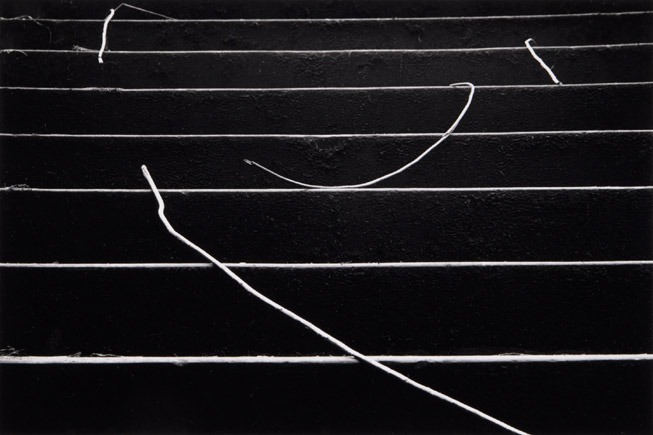
The first of David Williams’ series that I came across was ‘Is’: Ecstasies I-XXII.  They were in the Print Room of the Photographers’ Gallery when I came to work there at the end of the 1980s, needing exhibition and sale.  I immediately understood that they were musical in their essence – neither abstract nor factual but both.  He’d been a musician, I knew, and had been ill enough to make performing difficult, and this was perhaps a translation of something musical.  I felt they were quantum photographs or Schrödinger’s photographs which managed to be both of their subjects and not of their subjects at the same time.  This seemed to me then (and still seems to me now, so many years later) far more than a successful trick in a series of photographs: it was a big lesson to me. It was a lesson in the impossibility of keeping photographs in tidy pigeonholes. It seemed to me as foolish to look at ‘Is’: Ecstasies XIV and ask “But what’s it a picture of?” as it might be to listen to Art Tatum and ask the parallel question of the music.  Photography is very often an applied art, no doubt of that.  It does jobs for people, has uses, carries the power of messaging.  It can be solid, practical, easy to read – and when it needs those qualities, it has them in spades.  But those qualities won’t help you when you come to try to understand or even appreciate certain photographers.  David Williams is one of that group.  When I looked at those little dark pictures with their sharp scratches of light, my best chance of understanding them came from remembering how I approached music, how I sometimes felt I knew that it worked.  I had never heard the description he has remembered in this book that his fellow boarder at a Cistercian monastery once came up with, of those pictures as blues photographs – but I recognise it absolutely.   

There’s another thing. Williams has always defined the professional conventions of photography to suit himself – he is a photographic artist who has found a system that suited him, not a professional camera operator who has sometimes had the leisure to aspire to art.  To try to get an impression of what I’m suggesting, ask yourself what André Kertesz’s job was.  He sold pictures to magazines, sure enough.  He worked for Vu, for years for House & Garden.  But you don’t begin to understand what he was up to if you try to think of him as a photographic journalist.  Lee Friedlander made brilliant record covers – and nudes of Madonna! – but you won’t get far if you think of him as a ‘commercial’ photographer. 

Williams is like that.  Professionally, he has found a long gig as an academic that allowed him to do certain things.  Somebody might pay an air fare to Japan, for example.  But quite quickly, he found a place with room for him that was more radical than it seemed at the time.  As an academic practitioner, Williams is one of the pioneers of something which has become common since he tried to piece together the elements of a ‘career’.  It’s very normal, today, to see photographers who have found shelter enough in an academic job to develop their careers as pure artists.  It doesn’t even sound very radical.  It wasn’t always so easy.  There were fewer institutions with photographic courses, for a start.  Yet from 1990 to 2017, a huge chunk of anybody’s career, Williams lived according to the peculiar seasons and stresses of an academic institution. That gave him security, presumably, and he was prepared to pay the price. Had I ever been a photographer, I would have given a lot to have been taught by him, to have had his eyes on my pictures at the outset of a career.  That framework is important.  Williams needed a context and he found one.  But I think it’s essential that we refrain from thinking of each series that he has made from within that context as a ’piece of research’.  That does the pictures no justice and reduces them to the staid procession of ‘outputs’ that academic convention requires.  

So here we are.  If we are not to think of Williams’ lifetime of work as ‘applied’ photography and not to think of it as ‘research’, it becomes necessary to think a bit what it might be.  Of course it’s art – but that doesn’t get us very much farther. 

David Williams, ‘To attract her attention… Do anything’. From the Series Findings…Bitter-sweet
David Williams, ‘Big things were easy… Wee things were difficult’. From the Series Findings…Bitter-sweet
David Williams, Stillness – Occurrence #11
David Williams, Stillness – Occurrence #3

There are one or two constants which can help us understand.  In the first place, Williams has always been completely in step with the specific photographic media that he used at any one time.  Those pictures from ‘Is’: Ecstasies I-XXII are silver prints, and wonderful masterpieces of that specific technique.  They reek of shiny darkness and ooze light.  I happen to believe that it is no coincidence at all that Williams was ill around the time he made them: they are pictures that battle against the hail-fellow-well-met fairground jollity of so much photography.  Blues pictures, indeed.  Roy de Carava would have recognised them straight away.  I have no idea whether it ever happened, but I hope that de Carava had a chance to see them somewhere. And de Carava, I remind you, made a great, great book called The Sound that I Saw. Once again, we can see that transferring some of the habits of our appreciation of music to Williams’ images may help. Admiring the skill gets us started as it might with a Chet Baker or an Oscar Peterson.  Once Williams had made silver prints like that, with a loving mastery that looks very like virtuosity to me, he switched to the wonderful Polaroids of Findings, whose clarity is just out of graspable reach, like photographs of the very act of yearning.  He makes other pairs and triplets and sequences (again, the usual tools of music-making) all done with mastery.  The virtuoso lighting and making involved in Source. The lovely only-just-seen of the series Stillness-Occurrence. And so it has gone on, never stuck in a rut, always learning a new instrument, always delivering total control, mastery, and (let’s use that word again): virtuosity in the particular registers and tonalities of each new process or technique.

The second constant is both more obvious and harder to rationalise.  Many photographs (and the proportion only increases as the perpetual flow of imagery online gathers ever more volume) are made to be seen just once.  You glance, you get it, and you move on.  In the olden days before digital, nobody much bothered to pin a newspaper photograph to a wall the better to understand it (a few did, of course, but everyday readers did not). Nobody now, in the same way, much bothers to revisit a photograph seen on Snapchat or on Instagram, still less to print it. Williams’ pictures simply can’t be appreciated in that way.  He asks precisely the same effort as musicians routinely get:  you have to look many times at his pictures, to revisit them, to savour them, to allow your pace to be reset by them.  He works, in effect, not by stories or commissions – but like the musician he still is – by moods gathered together in albums.  What results is an invitation never merely to see the things that Williams has seen, but to really to absorb them and to see the wonder that he wants to show.  The title of the book is a clue.  Williams doesn’t really believe in difference.  He rejects the binary oppositions of conventional thinking, and by extension he rejects the glib this-against-that of so much photography.  He’s interested – in the lovely phrase found by Sara Stevenson for the introduction of this book – in the ‘inextricable links between difference and sameness’.  

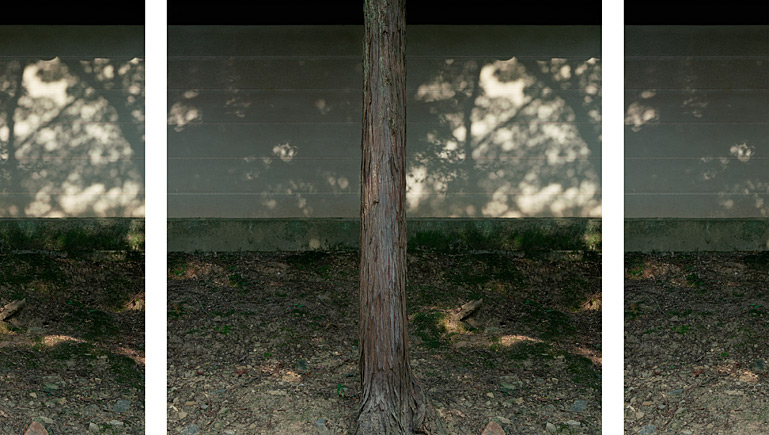
Cedar Tree Triptcyh #2 – Tofuku-ji Zen Temple (from the project series, one taste: (n)ever-changing)

I find I can discern all sorts of photographers with parallels to elements of David Williams’ pictures.  He mentions many himself, peppered through Dreaming Difference : Paul Caponigro, Minor White and so on, all respectfully adduced.  You could think of David Hockney in the Japanese temples, although where Hockney broke the image almost like a Cubist into dozens of fragments all seen from shifting positions over rapid time, Williams preferred a more formal break-up into much slower repeating tropes.  The thought of Japan takes me naturally to the great émigré Japanese photographer Tomio Seike and his astounding series Overlook (nominally of dog walkers on Brighton beach, but in fact not at all to be limited to anything so humdrum as subject-matter); much of Seike’s thinking comes close to several different aspects of the work Williams has done around the beaches at Portobello. I could go on and on – there are echoes of Markéta Luskačová’s work with schoolchildren in the very early Pictures from No Man’s Land, or of Richard Misrach in that steeply plunging view from the land down to the sea.  The point is not to compete in a referencing contest, of course.  The point is that Williams throughout his career has deliberately and knowingly placed himself in the context of those others.  He is not just a guy making pictures with a vaguely Zen or Eastern interest.  He has volunteered to put himself in the crossed lines of descent of many predecessors, and that is a kindness to his viewers – it makes it infinitely easier for us to understand and appreciate what he has done.  

So.  What have we here, in this late career book of a photographer who has never been fashionable, but has been quietly and lastingly influential?  We have a definite case made for slow steady seeing and for seeing, specifically, that doesn’t stop at the nominal subject.  For Williams, the visible subject is a metaphorical springboard to thoughts often far beyond.  It can take you to a philosophy if you want to follow him that far.  Separately, we have the triumph of virtuosity, where the prints themselves (if you’re lucky enough to see them and not just their reproductions in the book) have the loving specificity of process that gives a material feel and size and even a smell that guides our understanding of what the images contained within those prints might point towards.  And finally, we have an artist who invites us to make less of his originality, his topicality or his specificity at any one time than most photographers do.  The pictures gathered here are not about what happened on the day they were made. That is an extraordinarily courageous stance to adopt: it’s a photograph, he seems to say over and over again, but don’t look first at what it’s of. Look (if you can) at what it’s about.  And that will be worth your while.

I make sense of all that by imagining that David Williams has remained a musician all his career, even though he chose to use cameras rather than the sitar and other instruments which might have held him all this time.  That seems to be the way he makes sense of his own work, and it works for me.  

To Recognize What We Were


Mother0013

Matthew Finn: From Mother


There are lots of accounts in photography of intimately close relationships.  Of course there are, since you could say simply that photography has become the ‘natural’ medium of affection.  Every family album is affection congealed in physical form.  Every photograph framed in silver then perched on a mantelpiece or a piano was an attempt to hold on to affection – even if only dutiful affection.  Usually these worked in the absence of the person photographed; occasionally as some more ideal version of that person than the flawed daily one of wearied familiarity. Continue reading

Making a Mark

Caroline Fellowes. Animal, Vegetable, Mineral 8. 2014

Caroline Fellowes.
Animal, Vegetable, Mineral 8. 2014

Caroline Fellowes. Animal, Vegetable, Mineral 1. 2014

Caroline Fellowes.
Animal, Vegetable, Mineral 1. 2014

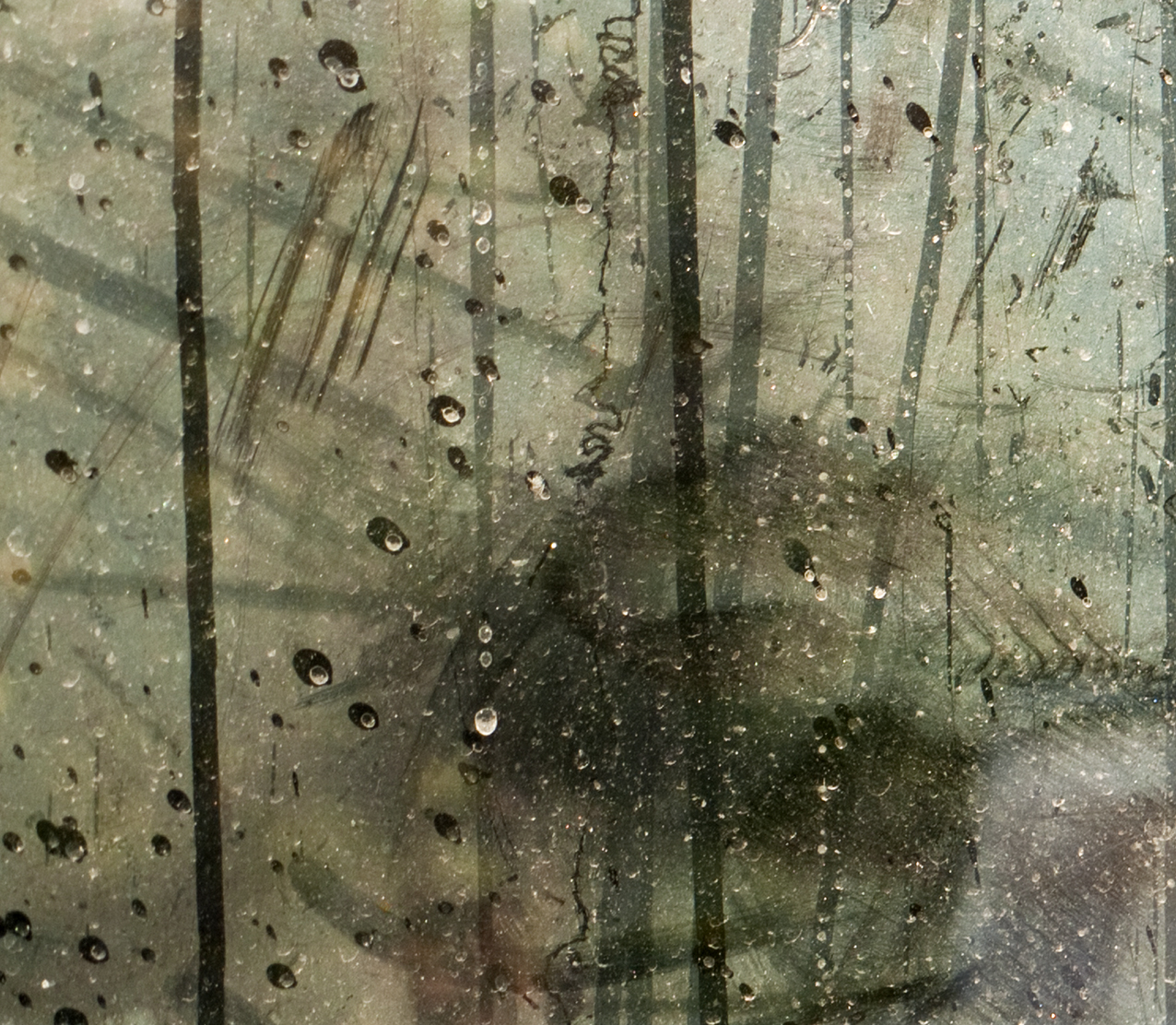
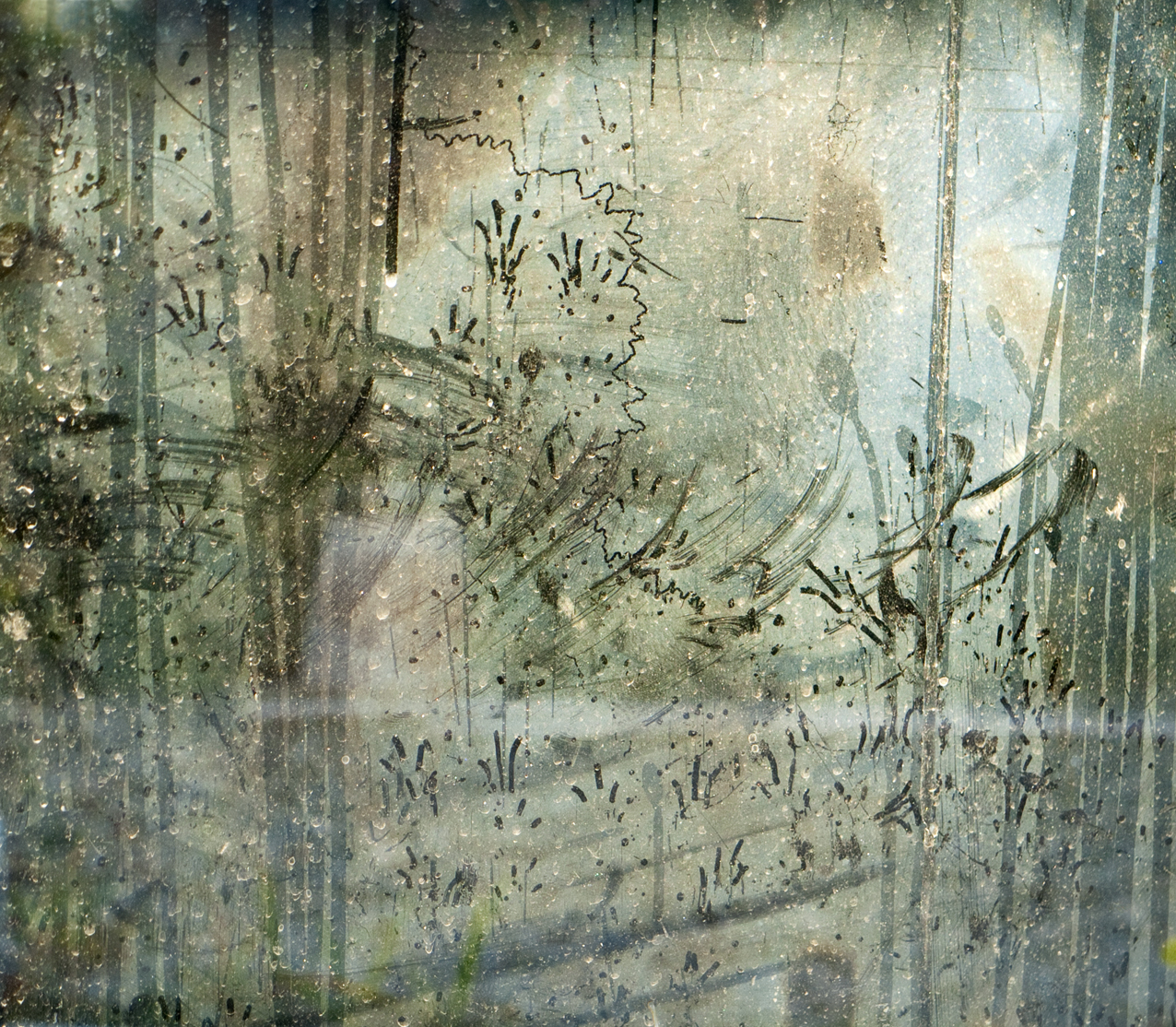
These extraordinary pictures are by Caroline Fellowes, an artist who lives in France but is represented by a gallery in Derry, in Northern Ireland.   They are wonderful things, and I post them today because they happen to sit right in the middle of a number of conversations I seem to be having with increasingly frequency of late. Continue reading